- The Product Prism
- Posts
- 🥷 🪄 The PM's Guide to Influencing Without Authority
🥷 🪄 The PM's Guide to Influencing Without Authority
How to steer the ship when you are not the captain

Gloria Adebayo
June 26, 2025 • Estimated Reading Time: 7 minutes

Insights
The PM’s Dilemma
You’re accountable for outcomes but control almost nothing. Engineers prioritise bugs. Designers chase pixel perfection. Execs pivot on whims. And yet the product’s success still rests on you.
Influence isn’t about authority. It’s about strategic leverage. The best PMs operate like diplomats, not dictators, building alliances, shaping narratives, and unlocking hidden shortcuts to "yes."
In this issue of Product Prism, I’ll break down exactly how to do that. You’ll learn:
3 Levers of Influence.
The 3-word question that disarms resistance (used by PMs at Google/Meta).
How to pre-wire decisions so meetings feel like formalities, not battles.
Real scripts for pushback from engineers, designers, and stubborn execs.
🆕 AI Tool of the Week.
Let’s dive in! 🚀
Introduction
Story Time: Earlier in my career, we were working on a new product in the team, and I thought I had everything under control. The scope was clear, the team seemed aligned, and I was walking into that meeting expecting a green light.
Instead, engineering started pushing back hard. Design said they’d need another round, and data wanted to “revisit our assumptions.” The meeting ran long. No decision was made. Someone messaged me later asking, “Who’s actually driving this?”
That one stung.
Looking back, I realised I’d made a classic PM mistake:
I assumed alignment would happen in the meeting instead of before it.
Since then and many more times, I’ve learned how to lead without authority by building influence in the quiet moments between meetings, not just in front of the deck.
Influencing without authority has many facets; so many facets. We will examine a few below.
1. Influence Is a Skill, Not a Personality Type
One common myth is that you need to be extroverted or charismatic to lead or to influence without authority. That’s not entirely true because while extroversion and charisma help, Influence is learnable, like negotiation or storytelling. It’s a muscle you can train and build.
However, influencing doesn’t always work (I could write a whole book on this experience); please cut yourself some slack when your influencing skills seem like they’re not having the desired effect. Some people will always be challenging to work with. Don’t give up; instead, reevaluate, give it some time - a few hours - and look in your toolbox to re-strategise. You got this!
For a start:
Map the "Invisible Org Chart":
Who actually approves decisions? It’s rarely who’s on the org chart.
Speak Their Language:
Engineers care about elegant code. Frame asks as tech debt reduction where possible.
Designers care about user joy. Tie priorities to NPS scores.
Borrow Credibility:
"Hannah from data science ran the numbers, and this approach has 3x ROI."
2. Stop Persuading. Start Pre-Wiring.
Most PMs waste energy fighting battles in meetings. The pros? They win the battle before anyone sits down in a meeting.
Try this:
Before any major decision, have 1:1s with key players. Not to convince, just to understand.
"Hey Ben, I know eng’s slammed, what’s the smallest version of this we could test?"Share your ideas, collaborate & consult.
Read how Amazon does it: Their 6-pagers force clarity before debate.
Why it works:
People often dislike surprises but appreciate and love being consulted. Give them time to marinate on your ideas, and by the meeting? They’ll think it was theirs all along.
3. The 3 Levers of Influence
1. Context Clarity
Tool: Decision Briefs (1-pagers with: Problem, Options, Recommendation, Risks).
Pro Tip: Share drafts before meetings. People hate surprises but love editing.
2. Trust Momentum
Tactic: Micro-Yeses
Start with small, easy wins ("Can we prototype this?") to build trust for bigger asks.
Script: "I know this is a stretch, what’s one piece we could test now?"
3. Power Pairing
Case Study: I once invited an engineering lead to co-write specs. Result? 80% less pushback. So much easier.
Script: "I’d love your input on this draft before I socialise it."
4. The 10% Rule (Your Secret Weapon)
Here’s the move to hold fast: Always leave 10% of your ask on the table.
When engineering pushes back:
"You’re right, let’s cut the last feature and nail the core."
When the design team wants to refactor:
"What if we ship this now and circle back post-launch?"
When execs pivot:
"Got it; let’s adjust these two milestones but keep the north star."
Why it works:
People need to feel they’ve "won." Give them that 10%, and they’ll (usually) give you the 90% that matters.
5: Scripts for Tough Scenarios
Scenario 1: Engineering Says "No"
🗣 "Totally get the concerns. If we could secure two more sprints for tech debt after this, would that help?"
Why it works: Trade-offs > ultimatums.
Scenario 2: Design Wants to Refactor Late
🗣 "Love the passion! Let’s ship this now, track how users react, and refine in the next cycle."
Why it works: Validates + timeboxes.
Scenario 3: Exec Whiplash
🗣 "Help me understand: Is this a change in goal (what we’re solving) or path (how we’re solving it)?"
Why it works: Forces clarity without confrontation.
6. When All Else Fails…
The 3-Word Magic Question:
"Help me understand…"
Engineering says no? "Help me understand the blocker."
Design disagrees? "Help me understand the concern."
Execs change priorities? "Help me understand the shift."
This isn’t just polite, it’s strategic. You’re not challenging; you’re curious. And 9 times out of 10, they’ll talk themselves into your solution.
Your Homework
This week, try just one thing:
Pre-wire one decision with 1:1s before the meeting.
Reframe one ask in your stakeholder’s language.
Leave 10% on the table in your next debate.
That’s it. Small moves, compound interest.
Final Thoughts
You don’t need authority to lead. You need to play the game differently with tact. This is a playbook; print it, have it handy, and refer to it when the going gets a bit rough. I wish I knew this as a junior PM.
Until next issue, go pre-wire something.
P.S. Forward this to that PM who’s stuck in endless alignment meetings. They’ll buy you lunch. 😁
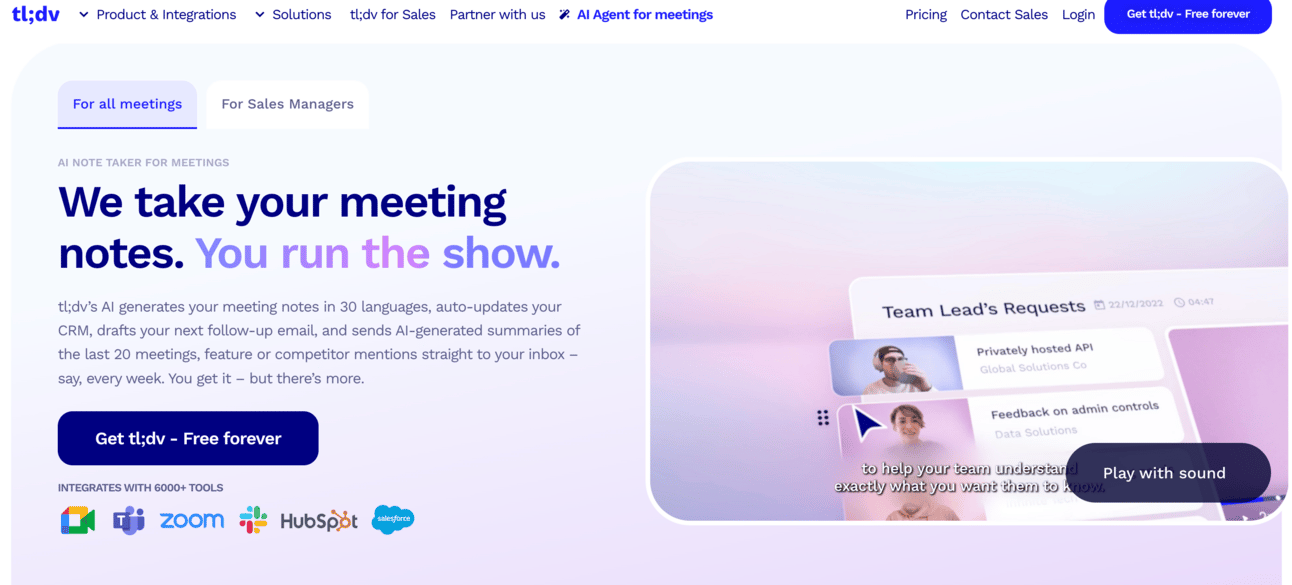
AI Tool of the Week: tl;dv
TLDV [AI Meeting Assistant]
What it is: Automatically records, transcribes, and summarises Zoom/Google Meet calls.
What it does:
Generates chapters, action items, and key quotes.
Integrates with Slack, Notion, etc.
Use Cases:
Remote teams reducing meeting notes workload.
Product managers tracking stakeholder feedback.
Recruiters analyzing candidate interviews.
Cost: Free (2 meetings/month); Pro ($20/month for unlimited).
Link: TLDV.io
Why it’s special: Unbeatable accuracy for technical discussions. AI that analyses Sales calls and gives feedback.
Going for An Interview?
🔗 Try Interview Buddy (v3): https://mock-interview-buddy.streamlit.app/
[It’s free, so there’s a general bucket daily limit]
To serve you better and create relevant content, please take a few minutes to complete this Survey. Thank you!