- The Product Prism
- Posts
- 🔢 🧭 North Star Metrics
🔢 🧭 North Star Metrics
Identifying KPIs That Truly Reflect Product Success

Gloria Adebayo
March 05, 2025 • Estimated Reading Time: 4 minutes

What is a North Star Metric?
The North Star Metric is the single metric that best captures the core value your product delivers to customers. It’s the ultimate measure of success and aligns all teams around a common goal. Examples include:
Airbnb: Nights Booked
Spotify: Time Spent Listening
Slack: Messages Sent
Facebook: Daily Active Users (DAU)
The NSM is not just a vanity metric—it reflects both customer value and business outcomes.
Why the North Star Metric Isn’t Enough
While the NSM is critical, it’s often a lagging indicator, meaning it shows the result of efforts after they’ve already happened. To proactively influence the NSM, teams need input metrics—leading indicators that predict changes in the North Star. For example:
If your NSM is Nights Booked (Airbnb), input metrics might include:
New host sign-ups (supply growth).
Guest search activity (demand growth).
Conversion rate from search to booking.
If your NSM is Time Spent Listening (Spotify), input metrics might include:
Number of playlists created.
Songs added to libraries.
Retention rate of new users.
How to Define Input Metrics
Input metrics are the actionable, team-level KPIs that directly influence the North Star. Here’s how to define them:
Break Down the North Star Metric:
Identify the key drivers of your NSM. For example, if your NSM is Nights Booked, the drivers might include:
Number of active hosts.
Number of active guests.
Booking conversion rate.
Map Input Metrics to Teams:
Each team should have input metrics that align with their function and contribute to the NSM. For example:
Marketing Team: Guest acquisition rate, cost per acquisition (CPA).
Product Team: Search-to-booking conversion rate, user engagement with new features.
Customer Support Team: Host satisfaction score, resolution time for booking issues.
Ensure Input Metrics Are Actionable:
Input metrics should be within the team’s control and directly tied to their work. For example:
Instead of tracking “total bookings,” the product team might track “percentage of users who complete their first booking within 7 days of signing up.”
Example: Airbnb’s North Star Metric and Input Metrics
Let’s revisit Airbnb to see how input metrics support the North Star: Nights Booked and Input Metrics that support the NSM.
By tracking these input metrics, Airbnb ensures that every team is contributing to the North Star in a measurable way.
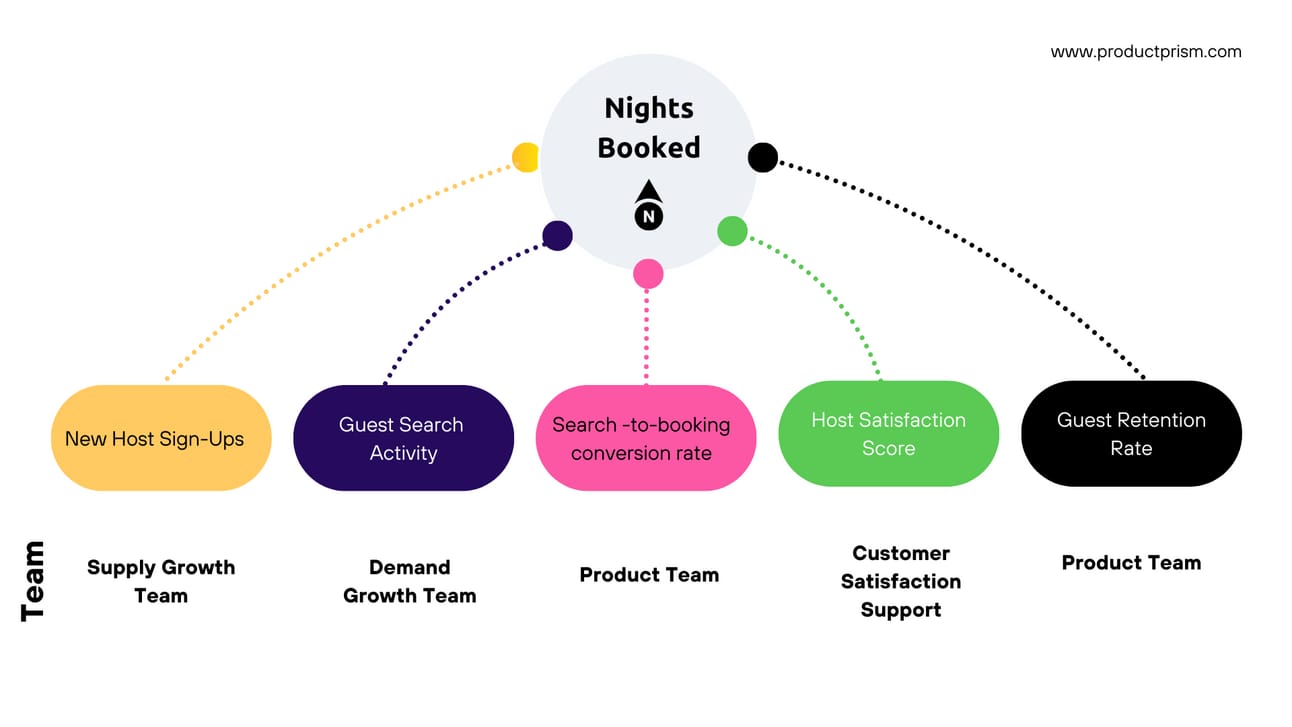
AirBnB North Star Metric and possible Input Metrics.
How to Balance the North Star Metric and Input Metrics
Avoid Overloading Teams:
While input metrics are important, don’t overwhelm teams with too many KPIs. Focus on 1 - 2 key input metrics per team.
Regularly Review and Adjust:
Input metrics should evolve as your product and business grow. Review their impact on the NSM regularly and adjust as needed.
Communicate the Connection:
Ensure every team understands how their input metrics contribute to the North Star. Use visual dashboards or regular updates to reinforce this connection.
Closing Thoughts
The North Star Metric is a powerful tool for alignment and focus, but it’s not a silver bullet. To truly drive success, you need a combination of:
North Star Metric: The ultimate measure of success.
Input Metrics: The actionable, team-level KPIs that influence the NSM.
Do-Not-Harm Metrics: Also known as guardrail metrics that ensure you’re not optimizing for the NSM at the expense of other important goals (e.g., profitability, user satisfaction).
By balancing these metrics, you can create a holistic framework for measuring and driving product success.
Template: North Star Metric and Input Metrics Framework
Here’s a simple template to help you define your NSM and input metrics:
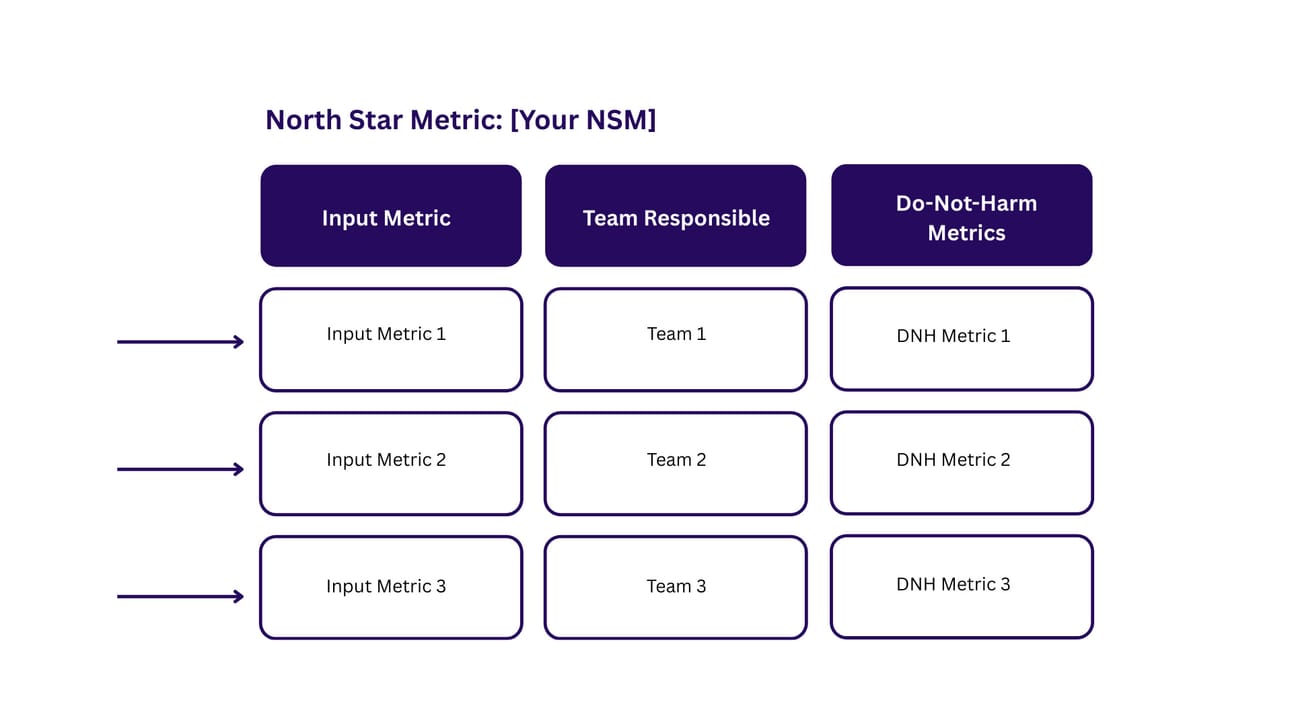
This approach ensures that your North Star Metric is supported by actionable, team-level metrics while keeping the bigger picture in mind.